
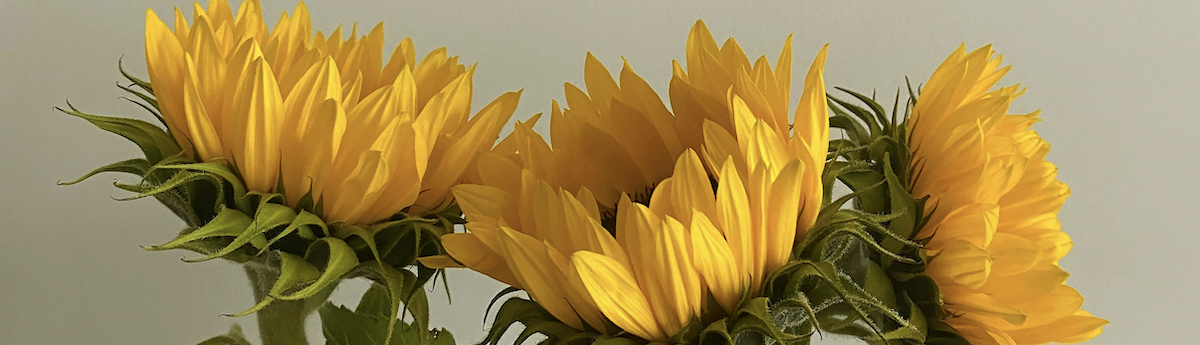
Photo by Sonia
June had entered its unreasonable phase.
The jasmine no longer climbed so much as advanced. During the night, it appeared to make private decisions of its own, extending exploratory tendrils toward neighboring balconies with the quiet confidence of an empire certain of eventual victory.
Tomatoes swelled with alarming self-belief. Nasturtiums escaped their designated containers entirely and began dangling toward the courtyard below “like botanical revolutionaries,” according to Madame Dupont. She tended toward this kind of drama.
Even Teddy had become unsettled.
For three days, he refused to cross the northeast corner of the balcony. He would approach it cautiously, stop, stare for several moments into what appeared to be ordinary air, then reverse direction with unmistakable concern.
The Balcony Gardener inspected the area repeatedly and found nothing except a terracotta pot, one abandoned sandal, and the watering can.
Still, June in Paris had become oppressive enough to encourage irrational conclusions.
Heat pressed itself against the city with theatrical intensity. Thunderclouds gathered daily above the pale rooftops before wandering away again without commitment. Down in Saint Paul, café patrons argued over mineral water, politics, and whether the season had become “unlivable.” Window boxes throughout the neighborhood erupted into emotional excess.
The Balcony Gardener herself had begun to feel wilted.
The heat aggravated her old aches. Even watering the plants had become laborious by afternoon. She found herself sitting quietly beneath the striped umbrella in the evenings, too tired to read, listening to the muted sounds drifting upward from the street below.
It was during one such evening that she became temporarily obsessed with sunflowers.
Madame Dupont arrived precisely as things were becoming unstable.”
Not the flowers themselves exactly, but the idea that they turned instinctively toward light no matter the conditions. This struck her as either admirable or exhausting.
The next morning, she purchased three enormous sunflowers from the market and announced to Teddy, who received the information without enthusiasm, that she would be creating a restorative summer infusion.
By late afternoon the balcony table had become crowded with bowls of sunflower petals, lemon verbena, mint, apricots, honey, sliced lemons, and several experimental jars whose contents no longer seemed entirely scientific.
Madame Dupont arrived precisely as things were becoming unstable.
“You are making medicine,” she declared approvingly.
“I’m making tea.”
“In June there is no difference.”
Madame Dupont immediately fanned herself with a seed catalogue, rearranged the ingredients without permission, and insisted that sunflower petals contained “stored sunlight” beneficial for morale, circulation, pessimism, weak character, and “the collapse of modern society generally.”
Teddy retreated beneath the table at once.
Together the two women brewed what Madame Dupont grandly named The Sunflower Brew. The liquid emerged a deep golden color that appeared faintly illuminated from within. The Balcony Gardener suspected the apricot liqueur Madame Dupont had added “for preservation” might be responsible for this effect.
The first cup tasted surprisingly pleasant.
The second encouraged unnecessary confidence.
By the third, the Balcony Gardener found herself repotting parsley at dusk while discussing the moral decline of balcony etiquette in contemporary Europe.
Above them the sky darkened abruptly.
The storm arrived with operatic violence.
Wind tore through the narrow Paris streets below. Rain lashed the balcony in silver sheets. A café umbrella detached itself entirely and cartwheeled down the block while chairs scraped violently across the pavement. Madame Dupont stood at the railing watching the storm with brightened eyes, as though the weather itself had restored her energy.
Plant pots toppled. Chairs skidded sideways. The jasmine thrashed dramatically as though resisting arrest.
Then, almost as suddenly as it began, the storm moved eastward toward the river.
Together, they restored the balcony to a reasonable state, though the jasmine remained politically ambitious.”
Afterward the city smelled metallic and clean.
The Balcony Gardener stepped carefully among overturned pots and soaked cushions, restoring order where she could. Broken stems were trimmed. Chairs righted. Wet seed packets rescued from beneath the table.
It was then she noticed the objects the storm had left behind.
Not debris exactly.
Things delivered.
A child’s drawing of a blue dog.
A grocery receipt from 1987.
A narrow silk ribbon, the color of faded cherries.
An unsigned note in elegant French handwriting, blurred by rain into pale blue shadows.
And finally, resting precisely in Teddy’s forbidden corner, a tiny rusted balcony key.
Teddy stared at it gravely but no longer seemed afraid.
The Balcony Gardener turned the key over in her palm. It was old, delicate, almost ornamental. One of those keys clearly intended for a lock that no longer existed.
For a strange moment, she found herself imagining all the balconies surrounding her through the decades, the women who had watered geraniums during wars, heatwaves, loneliness, marriages, grief, ordinary Thursdays. Women who had hung washing above these same streets and brewed teas for headaches, heartbreak, insomnia, courage.
Below, somewhere in the courtyard, someone began singing softly in Italian.
Madame Dupont reappeared carrying two dry towels and the remaining bottle of sunflower brew.
“You see?” she announced triumphantly. “The balcony wished to contribute.”
“To what?”
“To morale.”
The Balcony Gardener laughed despite herself.
Together, they restored the balcony to a reasonable state, though the jasmine remained politically ambitious. The unknown key was placed safely in the kitchen drawer beside string, batteries, and old seed packets. Teddy finally crossed the northeast corner without incident.
And on the little table beneath the storm-cleared Paris sky sat another warm pot of The Sunflower Brew, glowing softly in the June night as though small acts of optimism might still be enough to carry a person through the season.
Editor’s Note: Read more of the Parisienne horticulturist’s adventures here and in The Balcony Gardener Volume 1 and The Balcony Gardener Volume 2.