
The California Arts Council has announced the creation of the first-ever sector-specific strategic plan designed to attract creative economy business, retain talent, develop marketable content for national and international audiences, reach marginalized communities, and reflect California’s diversity.
“California’s Future Is Creative: Strategies for Cultural Resilience, Economic Growth, and Global Leadership” was developed by the Creative Economy Workgroup, established in 2022 under California Assembly Bill 127, with the California Arts Council leading the strategic planning process. The group was guided by the vision of California leading an inclusive and resilient creative economy that empowers artists, cultural workers, and entrepreneurs to drive culture, creativity, and innovation.
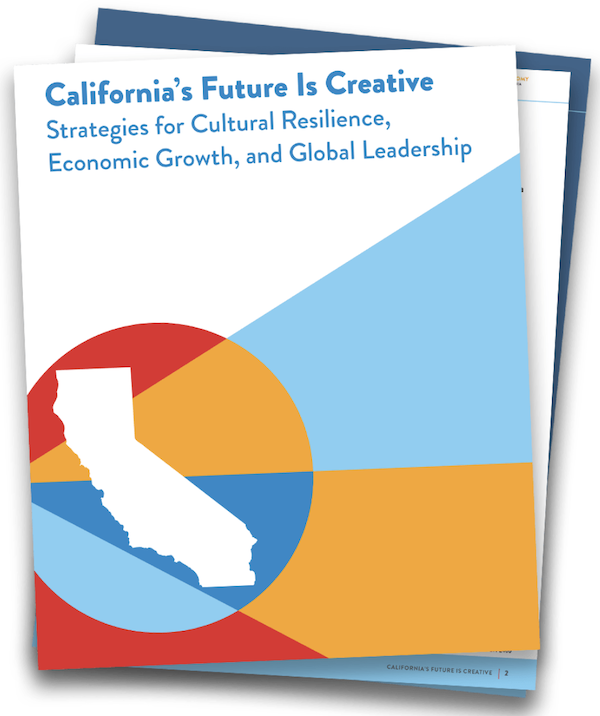 “This plan is not merely a set of recommendations,” Julie Baker, CEO of California for the Arts and California Arts Advocates, said of the 51-page document. “It is a vital, urgent blueprint to protect what makes California a capital of innovation and culture.”
According to the National Endowment for the Arts, arts and cultural production added $288.9 billion to California’s economy in one year alone while supporting 821,183 arts and cultural jobs.
“California’s creative economy is not just a cultural engine; it’s an economic powerhouse,” according to State Senator Ben Allen, chair of the California Legislature’s Joint Committee on the Arts.
Danielle Brazell, executive director of the California Arts Council, points to the opportunity creative work presents. “This plan gives California a way to meet that opportunity with intention, investment, and partnership.”
As California confronts rapid technological change, affordability pressures, climate disruption, and shifting workforce needs, the plan positions creativity as both an economic strategy and a public good. It calls for a coordinated, cross-agency approach to ensure California’s creative economy remains inclusive, resilient, and globally competitive.
Now work will begin on defining what implementation of the plan looks like, which includes mapping existing resources and initiatives, tracking state and local successes, modeling creative economy industry cluster definitions, piloting neighborhood-level data tools, and developing a detailed implementation plan with timelines, responsibilities, and resource requirements.