
Photo by Gemma Doll-Grossman
Disturbing, Compelling, and Engaging
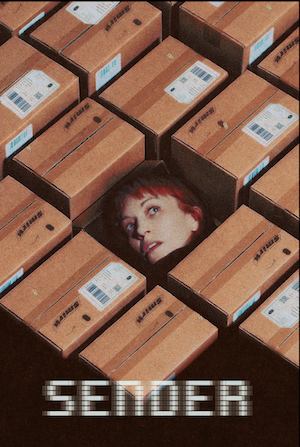
Russell Goldman’s new film Sender plays out as a confusing psychological thriller that takes viewers on a journey through the world of online purchasing and delivery of products, substance abuse, suicide, and recovery communities.
 If you’re looking for a feel-good movie this spring, you may want to catch some lighter fare.
The story begins with former physical education teacher Lisa (Jamie Lee Curtis) opening a package that contains grass—presumably from a soccer field—and an old shin guard with “CAN’T CAN’T CAN” written on it, causing her to have an overwhelming emotional reaction.
The exact connection of this experience to the main story isn’t clear, except that Lisa’s receiving deliveries of products she did not order is similar to the main protagonist’s struggle in the film.
That’s Julia Day (Britt Lower from Severance), who in the second opening of the film finds herself attending an AA meeting. She doesn’t join it, but sits aside laughing at someone sharing a difficult experience in the meeting. That’s “Whisky Whitney” (Rhea Seehorn from Better Call Saul).
We find that Julia lost her job due to drinking, and is a chronic insomniac and struggling artist. Whitney is an executive at a whisky distillery, and when she shares a verse from Rhyme of the Ancient Mariner with Julia, the two form a tenuous friendship.
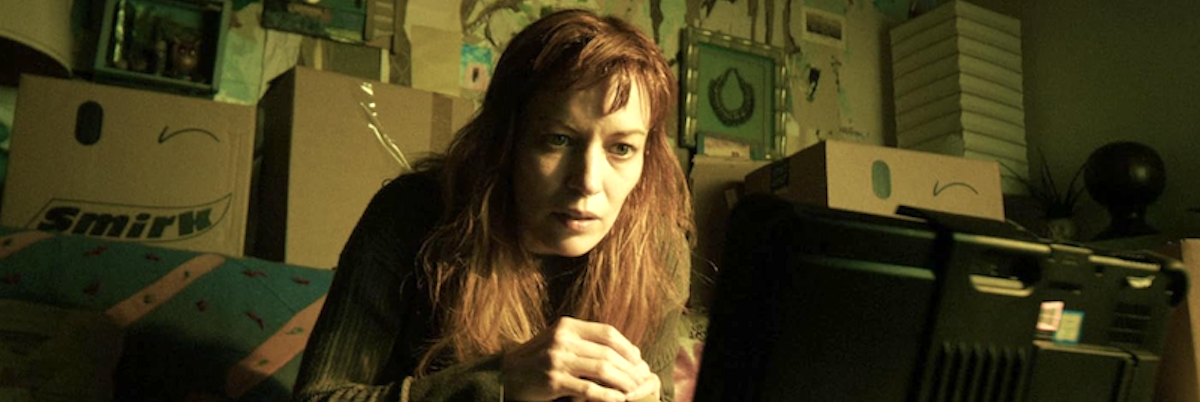
Julia begins receiving an endless flow of packages from the delivery company SMIRK, an obvious satire of Amazon (the company’s logo is an upside-down frowning parody of the curving Amazon arrow). Julia also forms a relationship with the quirky and awkward delivery person, pasty and emotionless Charlie (a great performance by David Dalmachian of Dune).
 All of the packages Julia opens (there are endless shots of her punching packages open and ripping tape) have something to do with her and her life, as if her story is unfolding through the products she gets from SMIRK.
What follows is a wild descent into madness and paranoia as Julia discovers someone has created an online profile with her name and writes reviews for the products she’s been receiving. She eventually sets out to solve this mystery, sending the movie into chaotic episodes, lightning quick montages, and spliced scenes, presumably replaying in Julia’s mind.
At one point, she discovers an article about Lisa, and the two seem to share a mystic connection. All the while, Julia’s caring sister (Anna Baryshnikov from Manchester by the Sea) tries to help.
The film turns into a wild mystery, with a handful of suspects and lots of scenes depicting frustrations with online customer service and identity security in our online technological age.
The film is disturbing, compelling, and engaging, with weird camera angles, discordant tension-building music, and homages to other struggling-with-mental-illness films like A Beautiful Mind.
The overly-busy storytelling, scene jumping, montages, and flashbacks leave us uncertain about exactly what is real and what’s in Julia’s mind. Sender comes off as an artistic project trying to present a dystopian world of mental illness, substance abuse, online identity tracking and theft through cinematic somersaults and outlandish editing.
If you’re a fan of David Lynch, Sender is worth watching.
The screening of Sender, (94 minutes, USA, rated R, in English) at the San Luis Obispo International Film Festival on Sunday, April 26 is sponsored by Jerry and Kim Scott.