
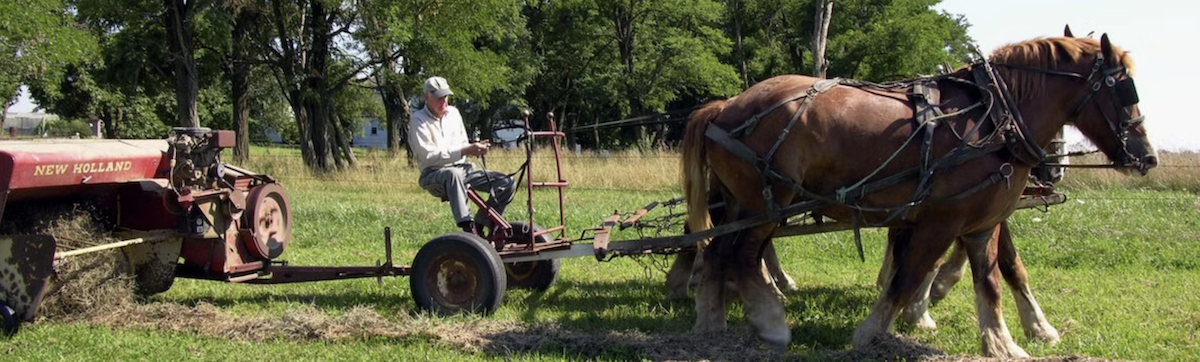
The Vital Role of Sustainable Food Practices
Focusing on efforts across America to rebuild the food system, Fork in the Road brings us compelling stories of individuals, couples, and communities whose livelihoods are threatened by changes in climate, agricultural shifts, and man-made disasters, and who find themselves challenged to overcome these hurdles in creative and sustainable ways.
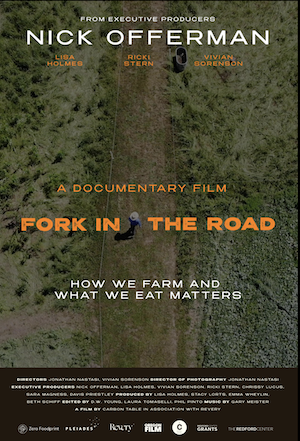 The 89-minute documentary highlights efforts to find sustainable income generators and the resources available to help in finding innovative and affordable solutions.
Co-directors Jonathan Nastasi (also the cinematographer) and Vivian Sorenson (also executive producer), bring six stories to life with descriptive narrative and compelling imagery, developing compassion, educating, and engaging our interest in the outcome.
Included among the diverse scenarios are a family transforming their farming practices in Kentucky, a community restoring the economy in Prince William Sound years after the Exxon Valdez oil spill, an urban community farm addressing food apartheid, and a farm worker in the Salinas Valley—her heath destroyed by pesticides—starting an organic fruit farm with her daughters’ help.
For each of these scenarios, experts provide knowledge and insights about land or sea-based farming alternatives, regenerative practices, and marketing strategies.
 On both coasts, kelp is identified as a regenerative resource for bringing health back to the ocean. In Prince William Sound, it not only combats lingering traces of oil in the waterbeds around Cordova but, according to Eyak native Dune Lankard, enables the Eyak tribe to preserve their relationship with food sources and a subsistence way of life.
Bren Smith, after leaving fishing due to declining populations on the Connecticut coast, saw his oyster farm destroyed by hurricanes two years in a row. He was subsequently able to secure a plot on the ocean floor for farming muscles in socks amidst the kelp, resulting in a reduction of losses.
For both Lankard and Smith, scientists have been helpful in their success by providing oceanographic expertise and insights.
The directors also bring in Marc Murphy, chef and owner of New York City’s Landmarc restaurant, and New York Times columnist Melissa Clark to explore how to make kelp a tasty and attractive menu item.
For the inland stories it is clear that the biggest threat for small scale sustainable farming, farming that connects consumers with food grown, harvested, and kept locally, is the large scale food industry which has been destroying the land, the rural way of life, and the personal connection between the people and the animals they raise.
Actor, writer, and humorist Nick Offerman explores how to best support small farmers with program staff of The Berry Center—a legacy of the novelist, farmer, and environmental activist Wendell Berry. Their programs are working diligently to maintain the viability and healthy food of local growers with growing success.
Fork in the Road is a riveting film that enlightens us on the vital role of sustainable food practices to nourish us, to localize production and delivery of food within our communities, and to heal the soil.
Beyond that, it is a compellingly interesting film that also leaves us hopeful and motivated to preserve a healthier, more community-based way of life.
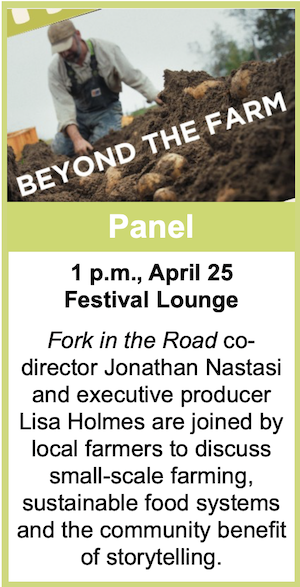
Screenings of Fork in the Road (89 minutes, USA, rated PG, in English and Spanish) at the San Luis Obispo International Film Festival April 23-28 are sponsored by Ecologistics, Inc. & FARMstead ED/SLO County Farm Trail.