
Photos courtesy Riot Artists
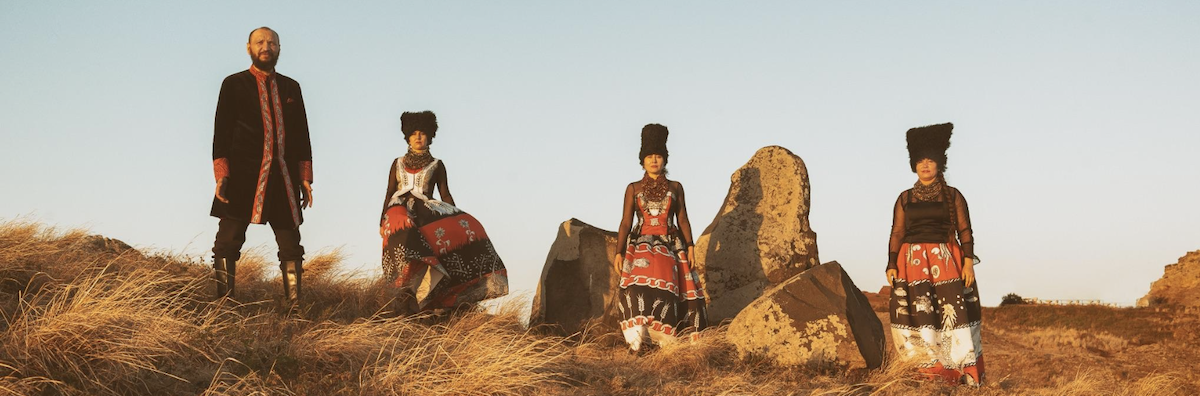
A Ukranian quartet—“like no other band I’ve ever seen” according to Cal Poly Arts director Molly Clark—comes to the Performing Arts Center SLO on Thursday, February 19.
DakhaBrakha combines sounds, words, melodies and impulses to create what they call “ethno chaos,” according to band member Marko Halanevych.
Halanevych, Iryna Kovalenko, Olena Tsybulska and Nina Garenetska have been working together for more than 20 years—some members having known each other since being in a children’s ensemble at a young age.
“We know and understand each other very well,” Halanevych says. “Each of us has our own ambitions and understanding of music, but we enjoy making music together, so we are always looking for compromise, balance, and ultimately harmony.”
The full group connected after university, meeting at the Dakh Contemporary Arts Center in Kyiv under avant-garde theatre director Vladyslav Troitskyi. They began to give ancient Ukrainian songs—some of them more than a thousand years old—a new life and a new sound.
“They really blend sort of traditional Ukrainian folk with more contemporary sound,” Clark says. “The way that they blend their voices just cuts you in your core, but is also just super entertaining.”
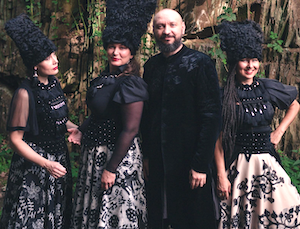 The name DakhaBrakha combines two Ukrainian words, found in a 1909 dictionary of the Ukrainian language, that no longer exist. Dakha means “to give” and Brakha means “to take,” according to Halanevych. He says it represents “the circulation of energy between us and the audience, between us and our roots and traditions, and between us and other traditions of the world.”
The quartet has performed on various stages across the world from New Zealand to Colombia. They also have taken part in numerous international festivals in Europe.
“We are happy that our reinterpretation of tradition has become close and understandable to people all over the world,” Halanevych says. “We are glad to perform at Cal Poly because it is a university known worldwide. As far as we understand, its distinctive approach is moving from learning directly into practice in order to achieve results as efficiently as possible.
“This approach is very close to us—we reached art in a similar way.”