
“I love when something beautiful comes from something simple.”
If you see one film at the Cambria Film Festival this year, make it Seems Like Love.
When you consider Russian literature, film, and temperament in general, it’s easy to think of brooding figures in extreme existential dread, or characters suffering physically, emotionally or spiritually.
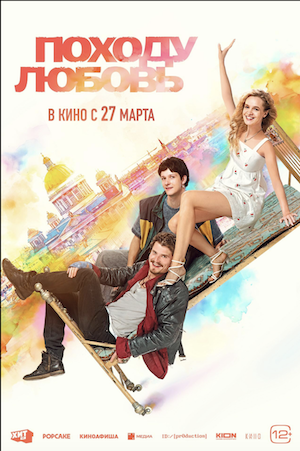 But Russian culture is as vast as the expanse of the land itself, and fairytales are prominent in that cultural landscape. With a title like Seems Like Love (Pokhodu lyubov in Russian), you may be expecting another cliché rom-com that you’ve seen a million times.
On the contrary, this new film by Yana Klimova-Yusupova (Only Human, 2022) materializes on the screen as a delightful surprise, and unfolds like a fairytale in the real world. The film features fun characters, creative cinematography and music paired perfectly, and outstanding directing that uses every motion picture element to tell a story about love, friendship, and forgiveness all wrapped up as a fairytale quest.
The story begins with Liza (Anna Zavtur) arriving in St. Petersburg. She is lithe, with blue eyes and long wispy blonde hair that seems to always drift in the breeze, and her white dress and white strappy heels seem poorly suited for a quest—except for a princess in peril.
We don’t know it right away, but she’s searching for her missing sister. Very quickly her backpack with all her important documents, identification, and cellphone is stolen, and she is left with only her denim jacket and a suitcase. Finding an old metal bed in an alley, in despair she sits down to cry.
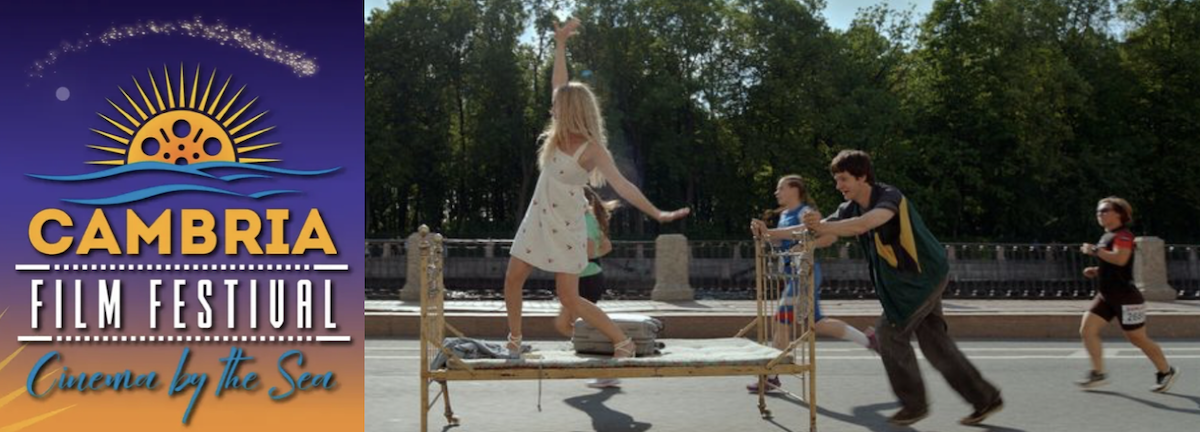
The bed belongs to Vasily (Kuzma Kotrelev), a young, sensitive artist type. They have a brief argument over ownership of the bed, which Vasily has to deliver across town to sell for cash, but his friend Victor hasn’t shown up with his car. Liza points out wheels on the bed, and after a brief haggle, she agrees to help push it across town in the midst of a marathon.
The story gets rolling along (literally) as the bed becomes the vessel for the epic city crossing. The third of the bed-moving trio is Victor (Sergey Gorosko), a flamboyant rogue with a diabolical appearance: wild hair, moustache and thin goatee, pointed features and a classic black leather motorcycle jacket.
Victor seems to know everyone, and does a little of everything, but is mainly a musician and something of a trickster archetype. He’s wildly charismatic, and he has stolen a girlfriend from Vasily before; the tension begins as these two knights errant vie for Liza’s attention.
These three young actors become their characters and the magic moments they create in the film dazzle.”
The scenes radiate with free-spirited exuberance, and inspire the film’s wonder. Ivan Burlakov’s cinematography amazes us with its tight variation of perspectives. We get side shots of the bed in motion, Liza riding it with Vasily pushing her—a more carefree vibe before Victor joins them. Suddenly they are overtaken and surrounded by colorful marathon runners and Liza sits up, arms in the air.
The often-deserted streets with canyon-like looming buildings are the forest of the fairytale, and in it the trio has mini-tasks along the way. They negotiate through gates guarded by a flask-sipping Ph.D., they buy gifts from street peddlers, and they deliver jam and a hat from a mourning mother to her son at a surreal opera birthday party art-scene (why don’t we have something like this in San Luis Obispo?).
They lug the brass bed up sweeping stone steps and cross bridges—all with dynamic camera shots making us feel like we’re travelling with them, or looking down or upon them as they roll the mystic bed. All the while Victor is putting out the word through various connections about Liza’s missing sister.
All along the way, the cinematography is blending like a moving painting with the film’s rich soundtrack into the scenes and story.
When Vasily puts on his headphones, we hear what he’s listening to, and the music’s mood and subtitled lyrics create atmosphere. The music seems to be contemporary Russian alternative, and even not understanding the Russian vocals, I found myself liking the songs, and later heard their tunes replaying in my head.
The dynamic friendliness and tension between the three main characters captivates us—these three young actors become their characters and the magic moments they create in the film dazzle. They enact the full range of emotions throughout the story, and we feel them.
It will draw you in and surprise you with its exuberant celebration of the magic and wonder in the simplest everyday things.”
The storytelling is subtly complex and tight. Pay close attention to the events and actions that occur along the way as many of them have significance later in the film. Klimova-Yusupova’s screenwriting and directing are artistically sophisticated but so natural you wonder at the thought and work that went into this film.
At its peak, just when all seems lost for our three heroes and it looks like it’s going tortured angsty Russian, everything changes because of a piece of art: a small wire flower made by Vasily.
Art, love, friendship, and forgiveness are the winners of this quest.
The ending sequence of this film’s 92 minutes is absolute mastery—watch even to the end of the credits. Every loose end is tied; it’s a perfect fairy tale.
The movie lives up to Vasily’s idea of creating beauty out of something simple (such as pushing a bed through a vast city). It has to be the most refreshing, unexpected, art-housey, naturally creative movie I’ve seen in a long time—maybe since Baz Luhrmann’s Strictly Ballroom, but I like this one even better.
Seems Like Love wakes us up and inspires artistic adventure seemingly without trying. It will draw you in and surprise you with its exuberant celebration of the magic and wonder in the simplest everyday things. Enter the storybook while you can!
Editor’s Note: Seems Like Love, sponsored by Edward Jones Investments and Archie’s Aloha Pest Management, is one of eight full-length films to be screened during the ninth annual Cambria Film Festival February 4-8.