
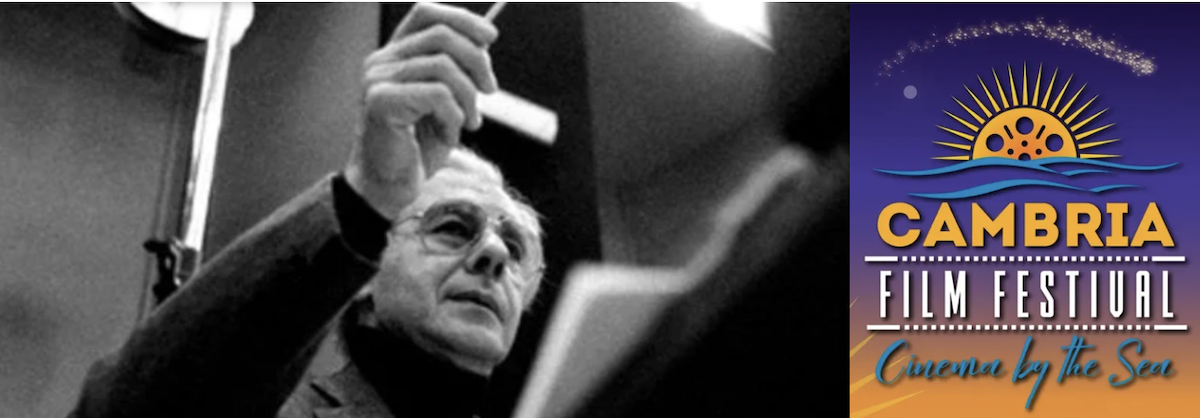
In the Tracks of Lalo Schifrin opens mid-conversation, as if we’ve stumbled into a recording session already in progress.
This isn’t a documentary so interested in beginnings or endings, in the usual arc of artistic biography. Instead, it’s a glance—unhurried—into the mind and music of composer Lalo Schifrin as he works and thinks on a lifetime spent finding the rhythm of films.
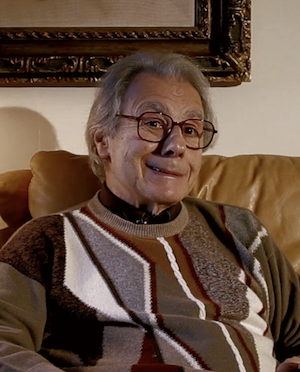
 Much of the movie alternates between critics and collaborators (even including his adult son) with each explaining how remarkable his work is, then cutting to Schifrin himself in an unassuming red polo shirt or cat sweater, smiling politely and responding to questions.
We then glimpse a sampling of his extraordinary filmography, as directors speak to working with him. One generously admits that his movie without Schifrin’s music would not have been good.
Where others build mythology, Schifrin offers facts, interests, philosophy. He seems to have no interest in performance, no cultivation of the Great Artist persona.
The 53-minute film moves through his piano lessons with Enrique Barenboim in Argentina, the Paris Conservatory and France’s liberation, his early years as a jazz arranger, the 1955 Argentine revolution, and a handshake with Dizzy Gillespie in 1958 that brought him to Los Angeles. But these aren’t presented as milestones in a hero’s journey. They’re simply the circumstances that shaped his thinking.
Director Pascale Cuenot weaves in archival recordings of Schifrin working on and discussing specific pieces, including a moment where as a young man he describes music as a psychological vehicle: it could be a point of departure into the minds of characters, not simply accompaniment to action. Between these reflections, the frame fills with street art and urban signage.
 Visual textures echo Schifrin’s emphasis on improvisation and the interplay between structure and spontaneity. The filmmaker’s approach expresses Schifrin’s jazz roots and the way he writes for musicians he knew, leaving room for them to interpret.
At no point does Schifrin project ambition or ego. He simply shares what he’s thought about and discovered while making music for nearly seven decades. What emerges is a philosophy that the composer is responsible for finding the film’s rhythm, and that popular expression matters as much as invention.
He speaks of working every day at the piano, starting with a teasing bit of music that remains a secret, a contract he made with himself to keep it so.
Cuenot holds back the composer’s most famous theme until the final moments, even though it appears in the trailer. It plays, unnamed, and the audience has to place it themselves. It’s a choice that feels generous and reflective of the man it’s portraying: let the work speak first, let the icon arrive last.
Schifrin passed away in 2025, and In the Tracks of Lalo Schifrin stands not as a summary of a life, but a careful glance into some of cinema’s most indelible music. It’s a reminder that great artists often care less about legacy than about the daily contract they keep with themselves, at their craft.
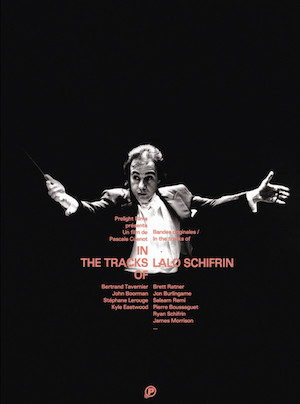
Editor’s Note: In the Tracks of Lalo Schifrin is one of eight full-length films to be screened during the ninth annual Cambria Film Festival February 4-8. The evening screening and Q&A on February 4, sponsored by Squibb Houses, will be hosted by Hollywood studio conductor and musician Michael Nowak, artistic director of Orchestra Novo and music director of the Santa Maria Philharmonic. The afternoon screening on February 6 is sponsored by John & Mary Nixon. Both screenings are accompanied by Behind the Score, a short film directed by Ali Habib.