

The newest film by Josh Safdie (co-director with brother Benny Safdie of Uncut Gems and Good Time), stars arguably the most relevant actor right now: Timothée Chalamet.
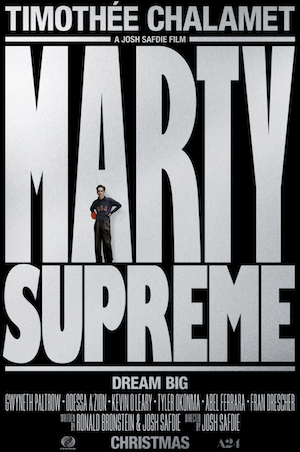 One reason that Marty Supreme is doing so well is because of Chalamet’s promotional run-up to the film, probably one of the best ever.
Leading up to the film’s official release, Chalamet sent Marty Supreme-branded jackets to celebrities he felt embodied greatness, he collaborated with underground rapper EsDeeKid to create a Marty Supreme rap song, and he made post after post on social media.
Because of Chalamet’s devotion to promotion, I walked into the theater with the expectations that this would be a film whose purpose is to show off Chalamet’s acting skills. However, I was pleasantly surprised to find that the extremely unusual cast performed just as well.
Marty Supreme gives us the first major motion picture performances by both acclaimed grammy-winning rapper Tyler the Creator and multi-million-dollar investor and reality TV star Kevin O’Leary. Tyler is hilarious, and O’Leary’s role couldn’t have been played better by anyone.
While Chalamet is the star of the film and delivers an incredible performance, I think the best performance in the film is from Odessa A’zion, who compared to superstars Chalamet and Gweneth Paltrow is relatively unknown. I think her role here will accelerate her career.
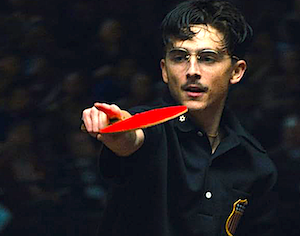
 The cinematography by Darious Khondji is excellent, with the climactic rematch scene being so tense and emotional you forget you are watching ping pong.
Marty Mauser is a 1950s Jewish shoe salesman from New York striving to achieve greatness through ping pong. Mauser is extremely selfish, willing to screw over those around him, but he is not motivated by money or greed. He is motivated by the satisfaction of winning, which may be unlikeable at times but is a very relatably human goal. I was never not rooting for his success.
The movie is relatively long at two-and-a-half hours and is layered with characters and subplots, which can oftentimes lead to messiness. The story, however, has a relatively clean and satisfying ending, and the subplots that remain unfinished are intentional.
I appreciated that the film’s setting, 1950s America, isn’t just there to make the film a nostalgic period piece: it’s actually important to the plot.
 Maybe because I saw this film at Christmastime over a holiday break, this is the first time in a very long time I have watched a film in a sold-out theater. Its commercial success is perhaps prompted by Chalamet’s passion, promotion, and clear connection to the film.
Marty Mauser is without question Chalamet’s most iconic role. He is so fun to watch on screen, and yet so is every actor in the film. Marty Supreme definitely lived up to my expectations. It’s funny, dramatic, and memorable.
The film’s hype, paired with its exceptional quality, gives me hope for the movie industry and its revival—undoubtedly led by Chalamet. Marty Supreme blew me away, and I recommend viewing it while still in theaters.
Editor’s Note: Marty Supreme is now playing at The SLO Film Center at the Palm Theatre.