

Photos © A24
In recent years a flood of celebrity biopics has tended to show the histories of beloved stars. Primetime from A24 does things a little differently.
It stands above them all as the most original and disturbing.
A quasi-biopic of Chris Hanson, star of Dateline NBC’s hit 2000s show To Catch a Predator, the almost-two-hour film focuses on the show itself, with Hanson serving as more of a personification of the show and all the ethical dilemmas it proposes.
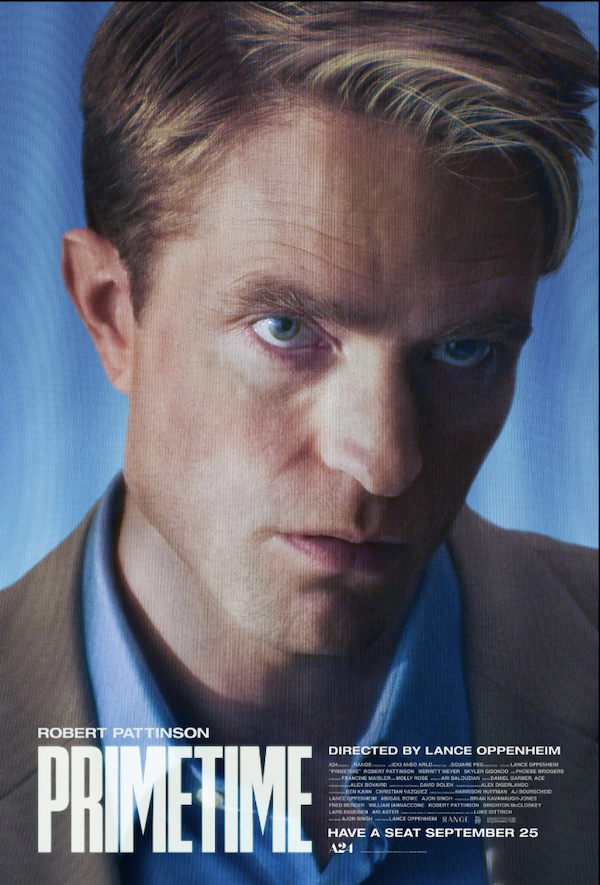 Instead of focusing exclusively on his rise to fame or his strained personal life, the film portrays Hanson, played by Robert Pattinson (delivering a powerful performance), as a greedy star willing to push the envelope of morality in order to secure favorable standing within the network and its placement on NBC’s schedule.
Serving as Hanson’s foil is Dan Plum, well played by Skyler Gisondo. An innocent aspiring actor, Plum gets strong-armed into being the primary decoy for unsuspecting predators in hidden-camera sting operations designed to expose and catch adults who travel to meet minors for illegal sexual liaisons.
Both Hansen and Plum are driven by career ambitions to participate in To Catch a Predator. Primetime’s primary message is that actually stopping child predators was not anyone’s motivation.
As both characters struggle to cope with doing the show, Plum resorts to treating Hanson as a paternal-style leader, as Hanson preaches the dogma that they are fighting an ancient evil that drives the predator’s actions. A central conflict of the film—the frantic justification of their actions when their primary motives are clear—is the one I find most compelling.
The R-rated film is controversial. First, it doesn’t explicitly paint Hanson as a good or bad character, but leaves it up to audience interpretation. Another source of controversy is the central thesis that getting what you want at the expense of others—even child predators—always comes at a price.
Unexpectedly, the film has hilarious moments of dark, dry comedy sprinkled throughout, in contrast with its almost horror-like content.
And as for style, director Lance Oppenheim has opted for a grainy, vintage, almost abstract feel. It’s amazing, using a 4:3 ratio meant to imitate the format of Primetime. This gives the film a claustrophobic feel as it progresses, and as the subject matter gets more and more disturbing, it literally gets darker.
While many viewers are interpreting the film as sympathizing with predators, I think it leaves it just enough up to interpretation to ask a broader question: what is the morality of performative justice?
Editor’s Note: Primetime is now playing at the SLO Film Center at the Palm Theatre.