

Maestro Andrew Sewell
San Luis Obispo Symphony music director Andrew Sewell kicked off his decennial season in quite spectacular fashion with an afternoon concert in the Performing Arts Center SLO on October 4.
Not only did he program two masterworks from the turn of the 20th century, he also commissioned a new work from a local composer.
Titling the concert “Rites of Passage,” Maestro Sewell chose works that skillfully and creatively carried that concept through. His orchestra matched him with mature and sensitive brilliance.
Here’s the blow-by-blow.
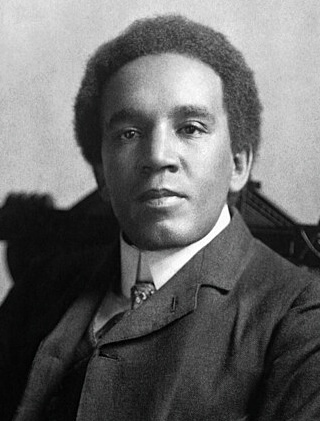
“Danse Nègre” from the African Suite by Samuel Coleridge-Taylor was a sparkling opener for the orchestra. Beginning with a galop-like rhythm, this music reflected the composer’s multi-ethnic heritage (English-Sierra Leonean). The orchestration is quite lush, like many of the works from the late Romantic Era—1898, in this case.
The SLO Symphony performed with a lively energy and panache. I was especially struck by the intonation, blend and dynamic nuance required of this work, delighting in the balance between flute and piccolo solos sounding over the rest of the ensemble. Maestro Sewell elicited numerous other moments of sonic artistry, attending to the melodic and rhythmic interweavings among the different instrument sections with grace and flair.
From something old to the brand-spanking new, a work by Grover Beach resident Stefan Podell was given its world premiere. Thanks to a commission from Garrett Foulke and Dorothy Correa—facilitated by the American Composers Forum—the former president of the symphony board has created a major symphonic work.

Podell’s A Sense of Place musically invokes the emotional impact of three California locations special to Foulke and Correa in a manner by which they hoped to share their experiences.
According to Maestro Sewell’s pre-concert lecture, the first movement, “Zabriskie Point,” was inspired by a unique phenomenon that can be witnessed in the titular location within Death Valley. A visitor is advised to “watch the sunrise facing the ‘badlands’ in the west.” This apparent paradox is resolved when the rising sun behind the viewer illuminates the craggy elevation in front of them—at first distant, then growing closer as the sun continues upward until the entire landscape is lit.
Podell incorporates a number of musical gestures to evoke the sense of the sunrise. Thus it begins with winds and strings intertwining slowly and quietly, gradually building in volume and density until the full orchestra announces the flooding of the landscape with sunlight. It reminded me of works by John Williams.
Podell next takes us almost 500 miles north by northwest to a quite different environment: San Francisco Bay. Starting at the Ferry station, Podell’s deftly crafted sonorities evoke the sounds of a foghorn, boat steam-whistles, crowds at vendor stalls. All was accomplished through the judicious use of mild dissonances in the low and high brasses and woodwinds, percussion and strings with multiple rhythm changes.
Having begun this sentimental musical journey with a sunrise at one of the driest places in California, Podell brings us to the southern end of the state: Pacific Beach in the city of San Diego. Just like the unusual feature of sunrise at Zabriskie Point, this location has its own solar rarity known as the “green flash,” an artifact of sunlight being refracted (think “rainbow”) by the earth’s atmosphere. This phenomenon is seldom witnessed because it occurs for only about a third of a second shortly after sunset and requires a location with an unobstructed view of the western horizon.
Of course, Podell’s music here slowly builds in anticipation, abruptly “flashes” with percussion and brass—just 333 milliseconds, please—then subsides with the warm “glow” of dusk. Rather than pause to delineate the separation between this and the final movement, “Here,” Podell lets us steep in the warmth of the previous movements’ closings with the reminder that “home is where the heart is.”
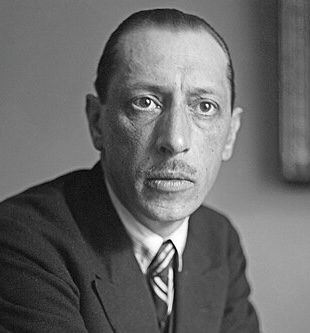
Maestro Sewell’s choice for the concert’s finale is considered one of the most influential works of the 20th century: Igor Stravinsky’s ballet, Le Sacre du Printemps (The Rite of Spring). Although works by his peers like Erik Satie, Claude Debussy and Arnold Schönberg pushed at the envelope of musical tonality and consonance, the Rite quite dramatically broke with 500 years of traditional melodic and harmonic tradition. Not only that, but Stravinsky pushed the sonorities of the symphony to greater effect by calling for a massive collection of instruments often played with techniques only recently brought into practice.
Right from the very first notes—a bassoon solo at the top of its range—the music grabs our attention. Ever-shifting tonalities and rhythms accompanying dancers seeming to defy the decorum of classical ballet certainly upset the Parisian audience at its world premiere. Ensuing performances were received with much greater equanimity and pleasure.
For the SLO Symphony presentation, Maestro Sewell amassed an ensemble of 87 musicians including all that were called for in Stravinsky’s score, from guiro to E-flat piccolo clarinets, Wagnerian tubas, bass trumpet, bass clarinets and contrabassoons. He then led the orchestra in a superb rendition of this magnum opus with what can only be described as an intense aerobic interval workout with baton.
Hats off, too, to the performers’ focus and skill in all the works!