
Director and screenwriter Óliver Laxe opens his latest film, Sirāt (“path” in Arabic), with closeups of rave dancers moving in Shaker style to loud drumming sounds.
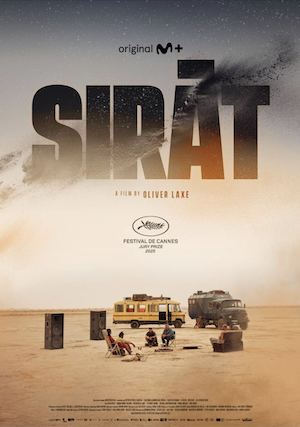 The ravers look punk and drugged, and they dance alone without partners, but in mass. The light is white and hot, and the scene is set against a massive orange clay hill. Large standing music speakers stacked like sculptures relentlessly blast rhythmic beats.
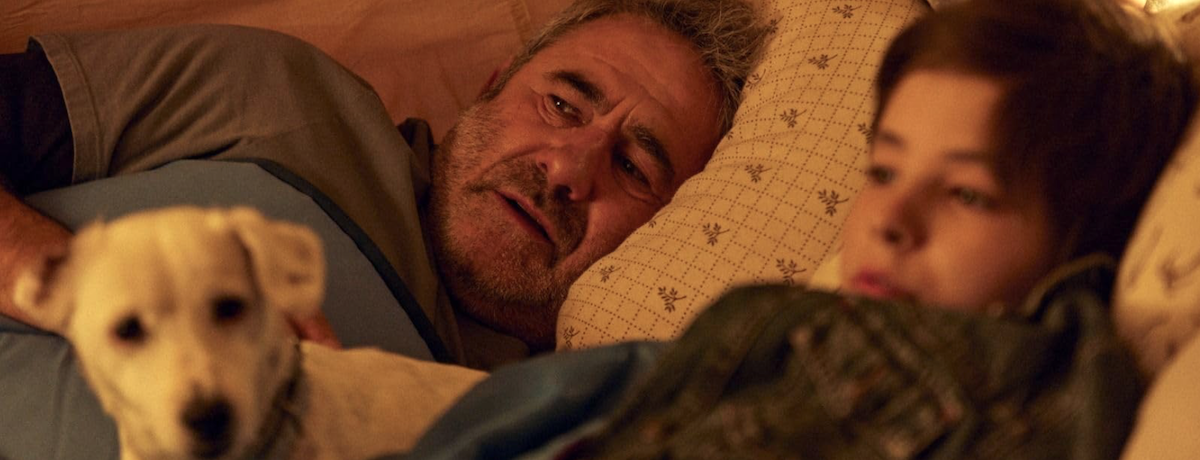
A small van driven by middle-aged and middle-class Luis (Sergi López), accompanied by his young son Esteban (Bruno Núñez Arjona), arrives at the rave site. Luis is searching for his daughter who he believes is a rave groupie. He distributes missing person flyers of his daughter.
After the dancing is dispersed by military soldiers, he follows five ravers who are moving on to another rave location, thinking he will find his daughter if he stays close to them. The plot of the movie centers on this trek and the interrelationships between Luis, his son, and the five ravers, and their relationships with both the natural and the manmade environment.
López and Arjona are the only professional actors in the film. The other five characters, two women and three men, were culled from actual rave meetings or street searches. Two of the men are amputees. All are excellent.
Sweaty and unwashed, the five soon warm to Estaban and his dog, and later to Luis. The ravers travel in an old converted city bus and a retired military vehicle, tailed by Luis’ car van. Together the seven are challenged in their travels by the landscape, at times mountainous, stoney, wind- and sand- whipped, drenched, or desert dry. Struggles for water, food and gas are constant, but the way is punctuated with moments of pleasure and friendship among the seven.

The path, however, soon meets multiple tragedies. Grief becomes a constant. But no spoilers here.
In interviews Laxe has said that his film is not meant to terrorize the filmgoer. If not terror, however, it does provoke horror and great anxiety. It has been a long time since I’ve looked away from a film screen to avoid what might be coming—but Sirāt had me doing just that. Not once, but several times.
Sirāt is a wonderful, disturbing film. Sited in both northern Spain and Morroco, the cinematography by Mauro Herce of the raves and the landscape—both in large scope and in detail—is beautiful. The acting is convincing and emotionally connecting. The score by Kangding Ray is both stirring and overwhelming.
In the 1970s, a genre now known as disaster films first appeared. In 2025, Laxe has given us his version of a disaster movie about the outcome of one man’s difficult path.
Editor’s Note: Sirāt is now playing at The SLO Film Center at the Palm Theatre.