
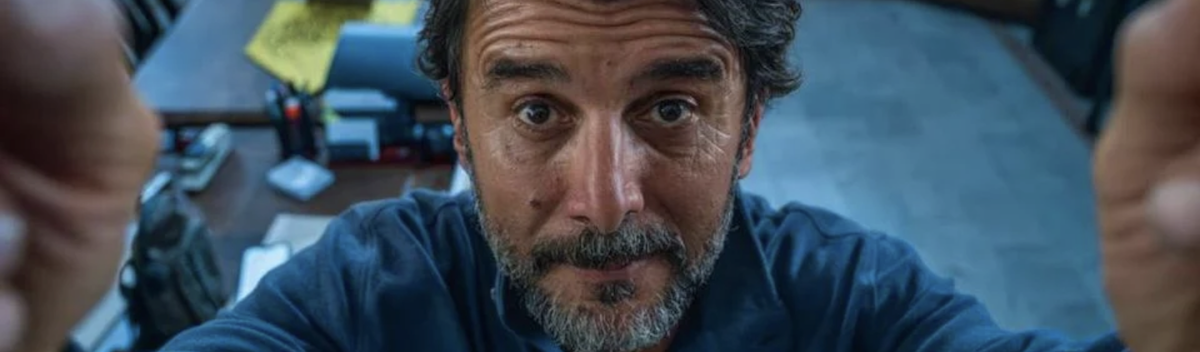
The Cambria Film Festival is excited to premiere its first-ever Iranian film: Whisper My Name. Director Rasoul Sadrameli (The Night) gives us an engaging story about a fragmented family and mental illness.
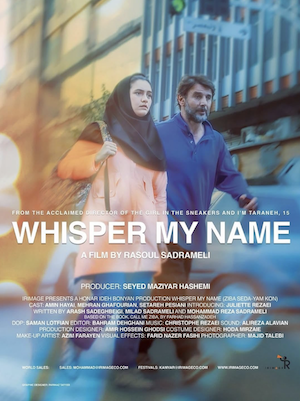 The movie’s narrative is the aftermath of a story that happened some years before. Our main character, former industrial crane operator Khosro (Amin Hayai), escapes from a psychiatric hospital to find his daughter Ziba (Juliette Rezai) so he can celebrate her 16th birthday with her.
Rezai plays Ziba as a contender, someone who has had to survive and thrive in a difficult world since she was very young. She’s impressive and believable as strong-willed and resourceful in a strict patriarchal society.
Rezai is able to depict a variety of emotions and attitudes so natural that we imagine we’re there with her instead of viewing her on a screen. Though Ziba is at first annoyed and apprehensive when her father shows up, she warms up to him and the two embark on a strange journey not only through the city, but also their past.
Khosro may suffer from a form of schizophrenia, but in the course of the narrative, he is mostly stable until some scenes make us question whether something he experiences is actually happening or is a hallucination.
Khosro is a struggling and tormented person, but also seemingly good-willed—garnering empathy from the audience. Hayai plays the character consistently and well, with us sometimes forgetting Khosro is mentally ill. His compulsive madness makes for some surreal, and even fun, episodes in the film.
For example, Khosro steals a motorcycle and takes Ziba on a joyride through the crowded city streets. In another scene, the Morality Police (yes, you read that correctly, and they’re real) are rounding up a bunch of crying young women into a van. Khosro jumps in the driver’s seat, speeds away, and sets them free elsewhere in the city.
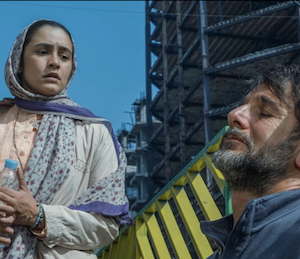 Society has a variety of ways to approach mental illness: Sometimes it’s fascinating, sometimes it’s spoken of or depicted humorously (perhaps as a coping strategy), or sometimes it’s scary. Sadrameli depicts the condition with subtlety and distance.
Khosro has not seen his daughter in years, but he knows it’s a special birthday. His desire to celebrate with her sparks this strange adventure for both of them.
What ensues is an off-beat father-daughter drama on a journey where what they discover is each other, but also fragments of the story of how their family broke apart. There is talk of Ziba’s mother abandoning them when Ziba was very little, and Khosro having some sort of breakdown, resulting in his years-long hospitalization.
On their sometimes-magical trek through the streets of Tehran, there is also a mystery worked into this plot that leads to a reveal so sudden you can almost miss it.
The film’s scope shows Sadrameli’s impressive ambition, and though it seems longer than necessary, it keeps surprising as it progresses toward its resolution.
Some parts may be a bit confusing due to cultural differences or shortcomings in the translation, but every time we think we know where the film is going or that it must be nearing a resolution, it turns again and keeps us engaged.
Whispher My Name is an inspiring piece of cinema, from the vistas of Tehran’s cityscape to the everyday wonders immersed in the gritty realism of its streets. In spite of some minor drawbacks—it is not without some hard-to-believe sequences—this movie is a great character study within a classic tale of a father connecting with his daughter in uncertain circumstances.
And its ending will keep you thinking about it after the credits roll.
Editor’s Note: Whisper My Name, making its U.S. premiere at the ninth annual Cambria Film Festival, is sponsored by Dixie Walker and Audrey Killick. It is one of eight full-length films to be screened during the festival February 4-8.