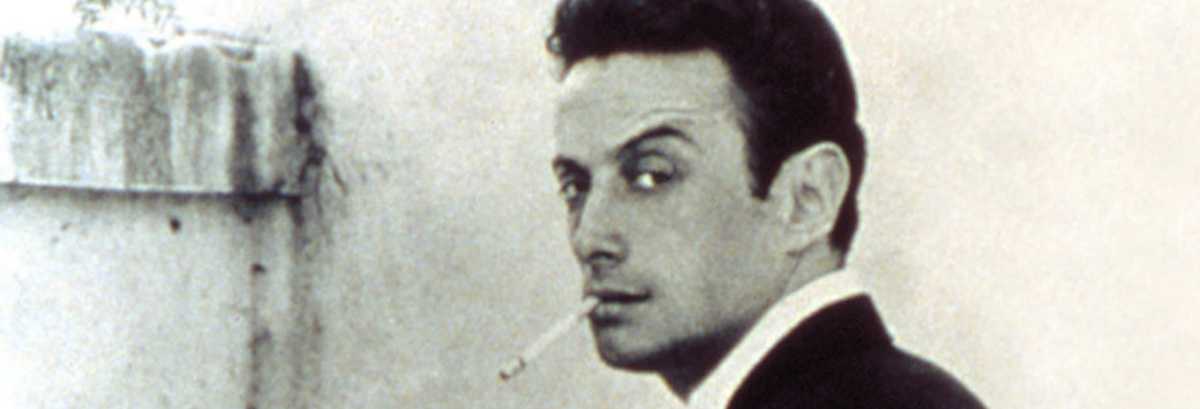
Lenny Bruce
In 2017, Rolling Stone magazine ranked the greatest stand-up comics ever. Richard Pryor came in at number one. George Carlin finished in second place. No surprise. Both iconic. The best.
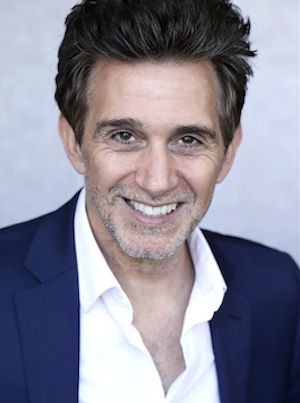
But actor/director/writer Ronnie Marmo wants us to remember the guy who finished third: Lenny Bruce.
Marmo believes that Bruce, through his constant First Amendment battles with government and broadcast censors in the late 1950s and early ’60s, actually paved the way for Pryor, Carlin, and so many other comics who performed on the edge.
For many of us, in this era where Free Speech seems under constant barrage and the government is attempting to silence the likes of Jimmy Kimmel and Stephen Colbert, Bruce seems more relevant than ever—even though he’s been dead for 60 years.
People can judge for themselves on Saturday, January 24, when Marmo brings his one-man play, I’m Not a Comedian…I’m Lenny Bruce, to the Clark Center in Arroyo Grande.
The title comes from a comment Bruce reportedly made on stage towards the end of his career. He had shifted away from traditional comedy in nightclubs by then, often angrily reading transcripts aloud from his 1964 obscenity court case on stage.
At one point, the story goes, Bruce stopped reading long enough to apologize. “I’m sorry I’m not funny tonight,” he told the audience. “I’m not a comedian. I’m Lenny Bruce.”
Marmo, a veteran actor of stage, film, and TV, has appeared as Bruce for more than 400 performances, with extended runs in both LA and New York. He wrote the play, which was directed by Tony Award winning actor and David Mamet veteran Joe Mantegna.
I believe Lenny’s is the voice this country needs right now. He exposed many of the so-called ‘untouchable’ subjects that are in the news again.” — Ronnie Marmo
“Lenny was a pioneer in comedy, in free speech,” Marmo says. “I believe Lenny’s is the voice this country needs right now. He exposed many of the so-called ‘untouchable’ subjects that are in the news again.”
For the uninitiated, an evening with Lenny Bruce historically meant a mixture of politics, satire, religion, sex, and often vulgarity—all in a free form style. He dropped f-bombs and the N-word as frequently as some would say hello. No topic, no word, was off limits.
But it was never for cheap shock value, according to Marmo. Bruce wanted to make a point.
“Lenny believed all words should be allowed,” Marmo says. “When the government bans a word, we actually give that word power.”
Bruce became a counterculture hero in those Leave It to Beaver days of the late 1950s. Eventually banned from television, his first obscenity arrest came in 1961 for using the word “c**ksucker” during a San Francisco performance.
The jury acquitted him, but Bruce was a marked man and quickly became a target of various local and federal government agencies. It wasn’t long before undercover police became regular audience members, hoping to entrap the comic. Great Britain denied him a visa.
He believed in what he was doing. With Lenny, it was just the truth. He found his voice based on the truth and holding up a mirror to society. He didn’t like hypocrisy.” — Ronnie Marmo
Everything came to a head in 1964, when a six-month trial followed Bruce’s arrest for a supposed obscene performance in a Greenwich Village nightclub. He was convicted, despite public support from the likes of James Baldwin, Bob Dylan, Woody Allen, and William Styron.
Bruce died in 1966 of a drug overdose at the age of 40, while his case was on appeal. In 2003, New York Governor George Pataki granted the comedian a posthumous pardon.
Some will recall the movie Lenny and Dustin Hoffman’s mesmerizing performance. More recently, the television series The Marvelous Mrs. Maisel had an extended storyline featuring actor Luke Kirby as Bruce.
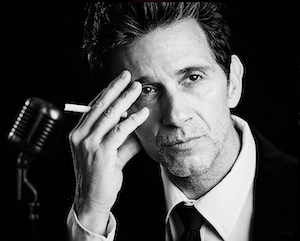
Marmo appreciates both performances, but insists his interpretation is the most authentic—a claim that has the support of Bruce’s daughter Kitty, who has effusively supported the play.
The key for Marmo is to be like the man he portrays: Tell the truth.
“That was the thing about Lenny,” Marmo says. “It wasn’t for shock value. He believed in what he was doing. With Lenny, it was just the truth. He found his voice based on the truth and holding up a mirror to society. He didn’t like hypocrisy. He was the guy willing to ask the question, ‘But why? But why?’ and they didn’t like that.”
On a personal note, in the small world department, Marmo and I share a friendship with Robert Corn-Revere, a noted First Amendment attorney who won the 2003 posthumous pardon for Bruce.
Corn-Revere has seen I’m Not a Comedian…I’m Lenny Bruce numerous times and has participated with Marmo in several post-show talkbacks with audiences. Marmo will do a talkback after the Clark Center show.
“Marmo is amazing as Lenny Bruce,” my friend told me. “He’s the best I’ve seen in this role, and the play just reminds everyone of Lenny’s relevance today. It is so timely.”
I already bought my tickets. To miss a show about Lenny Bruce? Well, that would be obscene.
I’m Not a Comedian…I’m Lenny Bruce plays at the Clark Center on January 24 at 7:30 p.m. The production is intended for mature audiences and contains strong language, adult themes, and brief nudity.