
Wow! They did it again!
Festival Mozaic music director Scott Yoo and colleagues dazzled SLO County art music aficionados on December 7 with three chamber works from the Romantic era (okay, the Beethoven opus was chronologically still in the Classical period, but—Beethoven!).
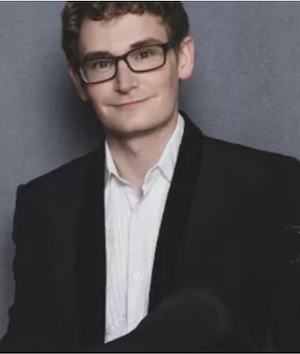
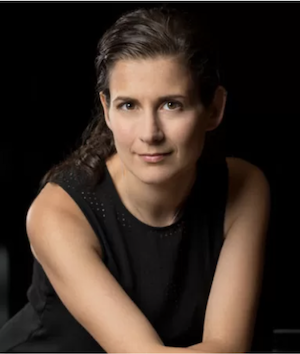
The afternoon Chamber Concert at the Harold J. Miossi Cultural and Performing Arts Center at Cuesta College began with stunningly rendered performances of Anton Webern’s “Two Pieces for Cello and Piano” by cellist Alexander Hersh accompanied by pianist Anna Polonsky.
Webern was well known for composing brief, intensely expressionistic works from the earliest days of his career (he was only 15 at the time of these works). This was true even before he entered the realm of serial composition that became known as the Second Viennese School, where traditional melodic and harmonic structures gave way to building music from series of notes that are only related to one another rather than a chord progression.
When Hersh and Polonsky took the stage, I felt a sense of presence that I’ve not often felt before a performance begins. It wasn’t misplaced. Hersh was instantly at one with his instrument and Polonsky’s keyboard work melded beautifully.
On paper, the music seems to bear the trappings of other composers of that period, albeit much shorter in duration. Both works together take only about four minutes to perform but, in that time, evoke a complex sense of intimate conversation between cello and piano, and between the duet and listener. They end quietly contemplative rather than with the rhapsodic endings of other works of the period, so the audience at this performance was not quite sure when to applaud—but soon did with great enthusiasm.
More than 100 years before Webern completed these opening works, an only slightly less youthful (24?—we don’t really know exactly when he was born!) composition powerhouse, Ludwig van Beethoven, completed his “String Trio in E-flat Major,” Op. 3.
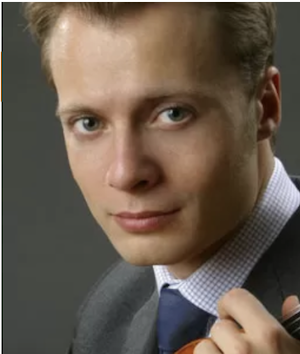
For this work’s performance, Polonsky got to take a break, and Yoo took the violin spot with Maurycy Banaszek on viola and Hersh returning for the cello part. A change in instrumental color, but certainly not in quality or energy.
Following a basic structure similar to Mozart’s “Divertimento for Three Strings,” K.563, Beethoven’s trio uses six movements, and the Festival Mozaic trio put their stamp of quality on each of them.
I’ve sometimes made snide remarks about audiences being more interested in watching a classical musical performance than listening to it, but this time was different. These musicians’ body language and facial expressions added a dimension to the aesthetic that I found compelling. I responded to these highlights:
- Allegro con brio: A masterful kaleidoscope of textures—unison, polyphony, homophony. With his disruptions of traditional Classical era melodic lines, Beethoven seems to be knocking on the door to the Romantic era some 20 years away.
- Andante: Strong echoes of Haydn and Salieri. Homophony with classic Alberti bass, but with many excursions into other key areas.
- Menuetto: Allegretto: Fairly traditional menuet and trio. The latter is notable for using the violin as the melody voice, the viola as Alberti accompaniment, and the cello providing a pizzicato underpinning. The movement closes with a typical Classical era return to the opening menuetto.
- Adagio: Sonorous melodic treatment typical of similar movements by Mozart. Beautiful, lieder-like melodic lines but with Beethoven’s dashes of deceptive cadences leading the ear to new tonal areas, hocket-like interweaving of instruments and a prolonged ending.
- Menuetto: Moderato: The repetition of the melody in the menuetto makes it sound almost like a rondo. The trio reminds me of the bagpipe-like musettes of early French dances.
- Finale: Allegro: Here’s Beethoven slyly rapping at that 19th-century door again with discontinuous phrases, lush textures, and democratically passing the melodic duties among the players and ending in a big way.
Cue the concert’s first standing ovation!
Jumping ahead to the year 1889, the Czech composer Antonín Dvořák finds himself on the horns of an uncomfortable dilemma: promote music influenced by his Czech heritage, or stick to the more formalized styles popular in Germany. Feeling a bit indebted to his (and also Brahms’s) German publisher, he acquiesced by writing the “Piano Quartet No. 2.”
Performing this work on this afternoon recalled Polonsky to the keyboard, and Yoo, Banaszek and Hersh all contributed more magic to the theatre “speaking” again with sound and bodies. The opening Allegro con fuoco movement was bold and fiery, beginning with stark unisons from the strings answered by almost symphonic piano passages.
It continued in a like “call and response” manner. Movement two, Lento, is divided into five subsections, each featuring different combinations of the instruments: cello, violin, piano, all strings, piano and cello. The third Grazioso movement possibly satisfied Dvořák’s desire to express his love of his homeland’s music while giving a nod to his publisher—he fashioned it after an Austrian folk music style known as a Ländler and included an imitation of the sound of a cimbalom, popular with the people of Bohemia.
The quartet’s Allegro, ma non tropo finale was a rich, almost orchestral sounding movement amassing the entire quartet.
Stand up and cheer, audience! And wow, did they!