
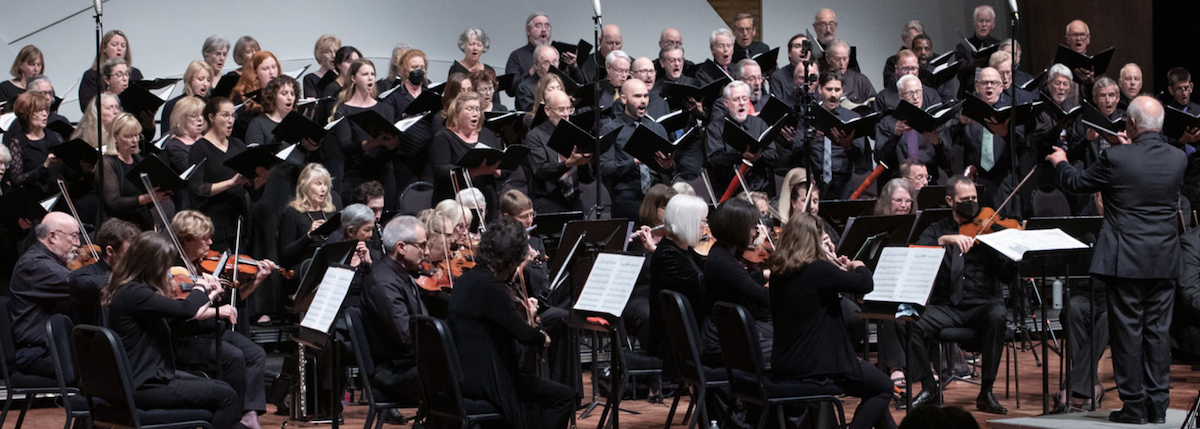
On the Sunday before Thanksgiving, Thomas Davies led the San Luis Obispo Master Chorale, its orchestra, and four soloists in a compelling trio of works from different musical eras: Classical, Romantic and Modernist. Each composition had a connection to the themes of joy and giving thanks.
“Songs of Joy” at the Performing Arts Center SLO began with one of the leading composers of the Romantic era. In 1892, Antonin Dvořák was enticed to leave his home country in Bohemia to take up residence in the United States as the director of what was hoped to become a National Academy of Music.
Part of that offer included writing a work for the celebration of the 400th anniversary of Columbus’s landing in the Americas. Dvořák chose the text of the “Te Deum,” a part of the Catholic Matins service that was often used for celebratory occasions.
Dvořák set the text for a mixed choir plus a soprano and baritone soloist. His orchestration included a sonic surprise in the form of a pair of tympani that got the “Te Deum” movement off to a fiery beginning. Davies’ orchestra and chorale balanced well, giving the audience a strong sense of mature musicality.
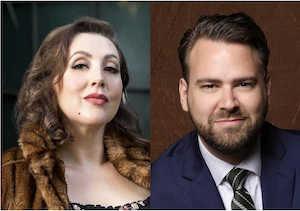
I found myself a bit distracted by soprano Jamie Chamberlin’s “Tu rex gloriae.” Besides a somewhat heavy vibrato, I felt her timbre was inconsistent and occasionally too far back from the mask for my taste.
Baritone Joel Balzun was solid and their duets were well blended but occasionally overwhelmed by the orchestra.
Fast forward a generation and we find ourselves in the early stages of the Modernist movement in music where the trappings of conventional tonality and structure are completely rethought and reworked. Sometimes they are altogether abandoned, as in the music of Schönberg and Webern, and in other instances old forms are refurbished with new sonic treatments like the Neoclassicism of Stravinsky evoking new audience reactions.
The latter approach is what Amy Beach used for her 1924 choral masterpiece, “The Canticle of the Sun,” a personalized setting of the Medieval song by St. Francis of Assisi.
Beach’s use of traditional diatonic tonalities such as C or D-flat major are used more to express her emotional connection to the text of the “Canticle” than the harmonic structures of previous centuries. Being a synesthete—one who perceives music also as color—Beach expressed musical ideas that were often more influenced by how they “looked” to her than by the more objective approach of harmonies dictated by their relationships to key signatures.
In the “Canticle,” Beach also was impressed strongly by the text, inspiring her to set all 12 stanzas for full choir, orchestra and soloists in just five days.
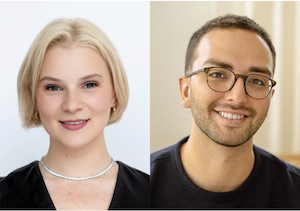
The conducting mastery rendered by Davies adroitly guided his ensemble of gifted choristers, beautifully complemented by soloists Chamberlin and Balzun plus mezzo-soprano Max Potter, tenor Manfred Anaya and the Master Chorale Orchestra through a presentation that paid sensitive homage to Beach’s artistry. The choir was full and rich in sound both in unison passages and polyphony, with good intonation, articulation and diction.
Rounding out the program’s theme of “songs of joy,” Davies and company produced a scintillating performance of Mozart’s “Vesperae sollenes de confessore.” Here’s my humble take:
- Dixit Domine: Gorgeous full choral sound, excellent blending both in unison and polyphonic passages, well balanced with the orchestra. Soloists exhibited excellent blending also.
- Confitebor: Solid unison entrance by choir. Chamberlin demonstrated mastery of style, especially dynamic shading.
- Beatus vir: Very clear enunciation and clean rhythm. Quartet was robust.
- Laudate pueri: Nicely executed fugue.
- Laudate Dominum: While Chamberlin exhibited great execution overall, my ear was still not happy with her timbre—this time too much in the mask, sounding almost nasal to me.
- Magnificat: Superb finish for choir and orchestra. Sorry, Potter and Anaya—I couldn’t hear you quite as well.
In conclusion . . . Bravi, maestri! Bravi, tutti!